
Warm Potato Salad with Dill Tuna and Lemon
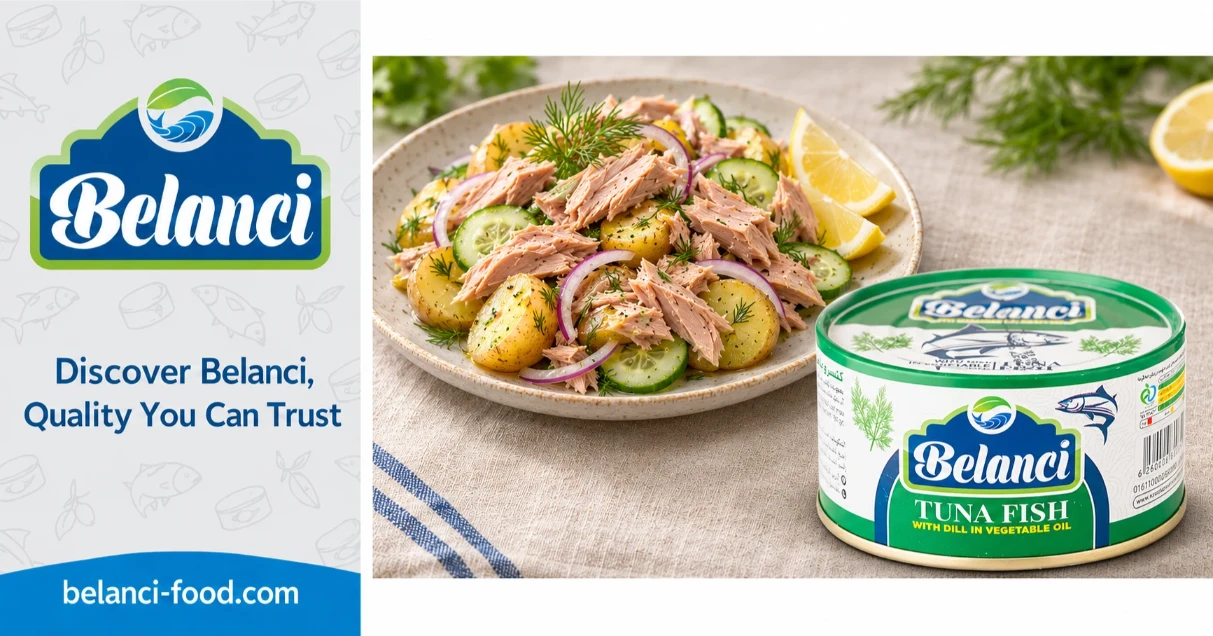
The best bite of this warm potato salad with dill tuna is a little uneven: a soft potato half, a crisp piece of cucumber, a flake of tuna and enough lemon dressing to bring them together. The potatoes are warm when you dress them, while the cucumber and herbs go in near the end. This gives the salad the comfort of a warm side dish and the freshness of a chopped salad. It needs no mayonnaise, and it works as a light lunch or an accompaniment to a larger meal.
Belanci canned tuna with dill in vegetable oil already brings an herbal note to the dish. That is why the dressing starts with lemon and a little mustard. Taste the tuna and potatoes together before deciding whether to add extra dill, salt or oil. The same approach helps when you are using different potatoes or a particularly tart lemon.
Choose potatoes that hold their shape
Baby potatoes or other waxy potatoes work well because they stay in recognizable pieces after boiling. Small ones can be halved; if some are much larger, cut those into quarters so everything cooks at roughly the same rate. Leave thin, clean skins on if you like the texture. The cut surfaces take up the dressing, and the skins help keep the pieces intact when you lift and turn them in the bowl.
Floury potatoes will work if that is what you have, but they require a lighter touch. Cut them into larger pieces and check them a little earlier. Once a knife slides into the center without meeting a firm core, drain them. If the edges begin to crumble, dress them in a wide serving dish and turn them with a spoon instead of tossing them in a deep bowl. Some broken edges are fine; the salad should still have distinct pieces.
Warm potato salad with dill tuna: recipe for two
Allow around 30 minutes for the potatoes, dressing and assembly, plus whatever preparation time the tuna label specifies. The salad feeds two as a light main or about four as a side. A wide bowl or platter gives you room to move the potatoes without crushing them and lets you see how evenly the dressing has spread.
Ingredients
- 500 g baby or waxy potatoes, scrubbed and cut into even pieces
- 1 can Belanci tuna with dill in vegetable oil, prepared according to its label
- ½ small cucumber, diced
- ¼ small red onion, thinly sliced
- 2 tablespoons fresh lemon juice, plus wedges for serving
- 1 tablespoon mild oil, or a mix of mild oil and a little reserved packing oil
- 1 teaspoon Dijon mustard
- 1 tablespoon chopped fresh dill, optional and added to taste
- Black pepper and salt, to taste
Preparation
- Put the potatoes in a saucepan, cover with cold water and add a little salt. Bring to a boil, then reduce to a steady simmer. Start checking after about 12 minutes of simmering; depending on their size, the pieces may need closer to 18 minutes.
- While the potatoes cook, whisk the lemon juice and mustard in a large bowl. Whisk in the oil and add black pepper. If using some packing oil, measure it as part of the tablespoon rather than adding it on top.
- Prepare the tuna following the can’s instructions, including any heating directions. Drain the excess oil and use a fork to separate the fish into large flakes. Slice the onion and dice the cucumber.
- Drain the tender potatoes and let the excess steam escape for a minute or two. While they are still warm, add them to the dressing and turn gently. Leave them for about five minutes while you set out the other ingredients.
- When the potatoes are no longer steaming heavily, scatter the cucumber and onion over them. Add the tuna and turn once or twice, just enough to distribute it without breaking all the flakes.
- Taste a forkful containing both tuna and potato. Add fresh dill, lemon or a little salt if needed. Serve while the potatoes are still warm, with lemon wedges on the side.
If the onion is particularly sharp, soak the slices in cold water for five minutes while the potatoes cook, then drain and pat them dry. The slices keep their crunch and taste a little milder. Dry the cucumber too if it releases a pool of water on the board. That small step keeps the dressing from collecting in the bottom of the bowl.
Why dress the potatoes while they are warm?
Warm potatoes take on the seasoning readily, especially along the freshly cut surfaces. Dressing them first means the lemon and mustard reach the ingredient that needs them most. If everything goes into the bowl at once, the cucumber and tuna can end up heavily coated while the potato centers still taste plain. Let the dressed potatoes sit briefly and try one before adding anything else. This is the easiest point to correct the balance.
There is a difference between warm and wet. Potatoes that go straight from boiling water into dressing can carry enough water to dilute it. Drain them well and give the visible steam a moment to settle. On the other hand, waiting until the potatoes are completely cold changes the character of the recipe. Aim for pieces you can handle comfortably that are still warm when you cut or taste them.
Balance the lemon, mustard and dill
Lemon should make the potatoes taste brighter without overpowering the fish. If the dressing seems sharp in the bowl, try it on a piece of potato before changing it. Potatoes soften the impression of acidity. A teaspoon of water can loosen a dressing that is both thick and tart. Add a little more oil only if the salad also needs a rounder finish, and measure it rather than pouring straight from the bottle.
The mustard makes the dressing easy to whisk together and gives the potatoes a little bite. If you prefer a quieter mustard flavor, start with half a teaspoon. Add fresh dill at the end so you can judge whether the tuna has already contributed enough. If you want more green color without doubling down on dill, use a little flat-leaf parsley. Add salt after tasting the complete dish because the fish and mustard already contribute seasoning.
Keep the tuna in flakes and the vegetables crisp
Lift the fish out in pieces rather than stirring it into the dressing. Add it after seasoning the potatoes so it only needs one or two gentle turns with a broad spoon. If the tuna is already broken into small pieces, scatter it across a serving platter and leave it on top. A visible layer of fish makes it easier to divide the portions evenly and gives each person a chance to pick up tuna with a potato.
Add the cucumber close to serving, especially if the salad will sit while the rest of the meal comes together. Salted dressing draws liquid from cut vegetables over time. For a crunchier version, replace some cucumber with thin radish slices or add finely sliced spring onion in place of the red onion. Keep those vegetables thin enough to fit on a fork with the potato and fish.
Serve it as a lunch or a side
For lunch, divide the warm potatoes between shallow bowls and distribute the fish evenly over them. A side of greens or a few slices of toasted bread is enough to round out the meal. For a larger table, use a wide platter and serve the salad beside roasted vegetables. If you include capers or pickles, add them sparingly; both can bring enough salt and acidity that the original amount of lemon may need adjusting.
If you plan to bring the salad to work, treat it as a chilled lunch and keep it refrigerated or properly cooled in transit. Pack the cucumber separately and add it when you eat. If storing leftovers, refrigerate them promptly in a clean, covered container and follow the storage directions on the opened tuna package. Cucumber softens once dressed, so reserve extra separately if you want to restore some crunch the next day.
Frequently asked questions
Can I leave out the fresh dill?
Yes. The tuna already contains dill, so taste the salad before adding more. Fresh dill is useful if you want a stronger herbal finish, but lemon and a little black pepper are enough for a simpler version.
Can I make the dressing ahead?
Yes. Mix it and refrigerate it in a covered jar. Shake or whisk it again before using and dress the potatoes while they are warm. Keep the fish and cucumber separate until assembly.
What if the salad tastes dry?
Turn the potatoes gently and taste one before adding anything. If the seasoning is already strong, a teaspoon of water can spread the dressing. If it still needs brightness, use a small squeeze of lemon. Add oil by the teaspoon only if the salad still needs it.

